Mansion History
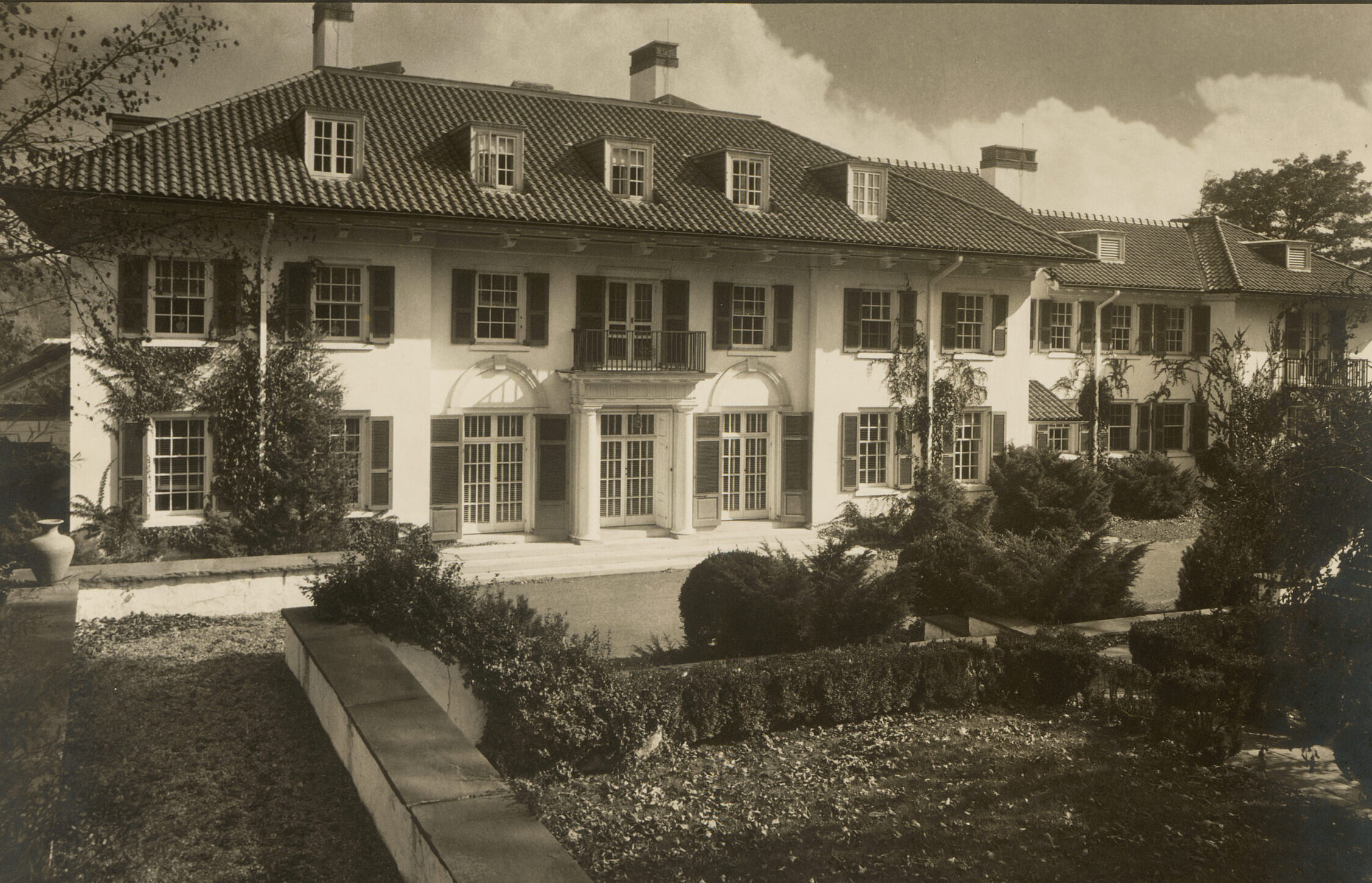
The 47 ½ acres of land surrounding the intersection of Paiste’s Run and Little Darby Creek, on the south side of Darby-Paoli Road in Villanova, Pennsylvania, is known today as “The Willows”. Currently a public park owned by Radnor Township —as well as the site of the Willows Mansion, operated by the nonprofit Willows Park Preserve — the land and the mansion that is perched on a hill overlooking the park have a rich history of prior ownership dating back to the late 1800s.
1896-1910 (pre-Mansion): Herman Wendell and E. Craig Biddle
In the 1890s, the countryside west of Philadelphia was beginning to transition from farmland into residential areas, and affluent Philadelphians were eager to purchase large country homes. Many families made this move to escape the challenge of city living, to acquire more land or sometimes to show off their wealth. The “Main Line” became a good investment according to Herman Wendell, a carpenter by trade and later a real estate investor who was instrumental in the development of several Main Line neighborhoods, including North Wayne. In 1896, Wendell bought 113 acres of land encompassing Paiste’s Run in Villanova, Radnor Township. Today, that land consists of the Willows Park and the Inveraray neighborhood, located across the street from the park. Wendell bought the property for $28,000 but sold it just four years later to E. Craig Biddle for $40,000.
Biddle, a descendant of the wealthy Drexel and Biddle families, built a large house on his newly acquired property. Craig’s uncle, George W.C. Drexel, provided the funding as a wedding gift for Craig and his wife, Laura Whelen. The couple named their home “Laurento”. Laurento sat north of Paiste’s Run and what is now Darby-Paoli Road. In 1909, wishing to sell part of his property to the south of Darby-Paoli Road, Biddle prepared and later sold roughly 47 acres to John Sinnott for $1. Oftentimes, a transaction for $1 meant that there was an arrangement between the buyer and seller – sometimes family members – by which the buyer took on any mortgages on the property, or where the families did not want to disclose the true value of the property for tax purposes. Two years later in 1911, Biddle sold the other 65 acres of his property, including Laurento, to banker Archibald Barklie.
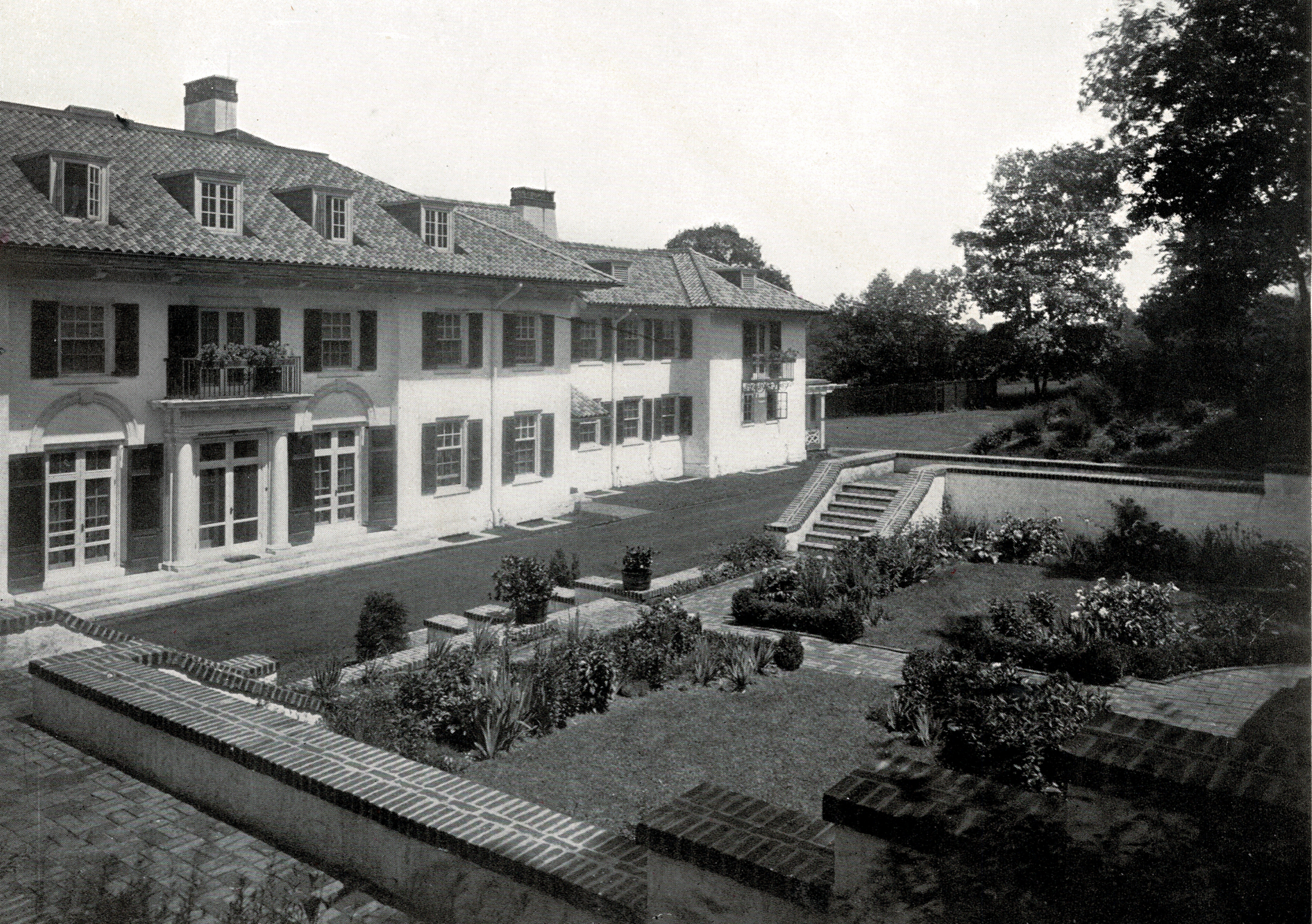
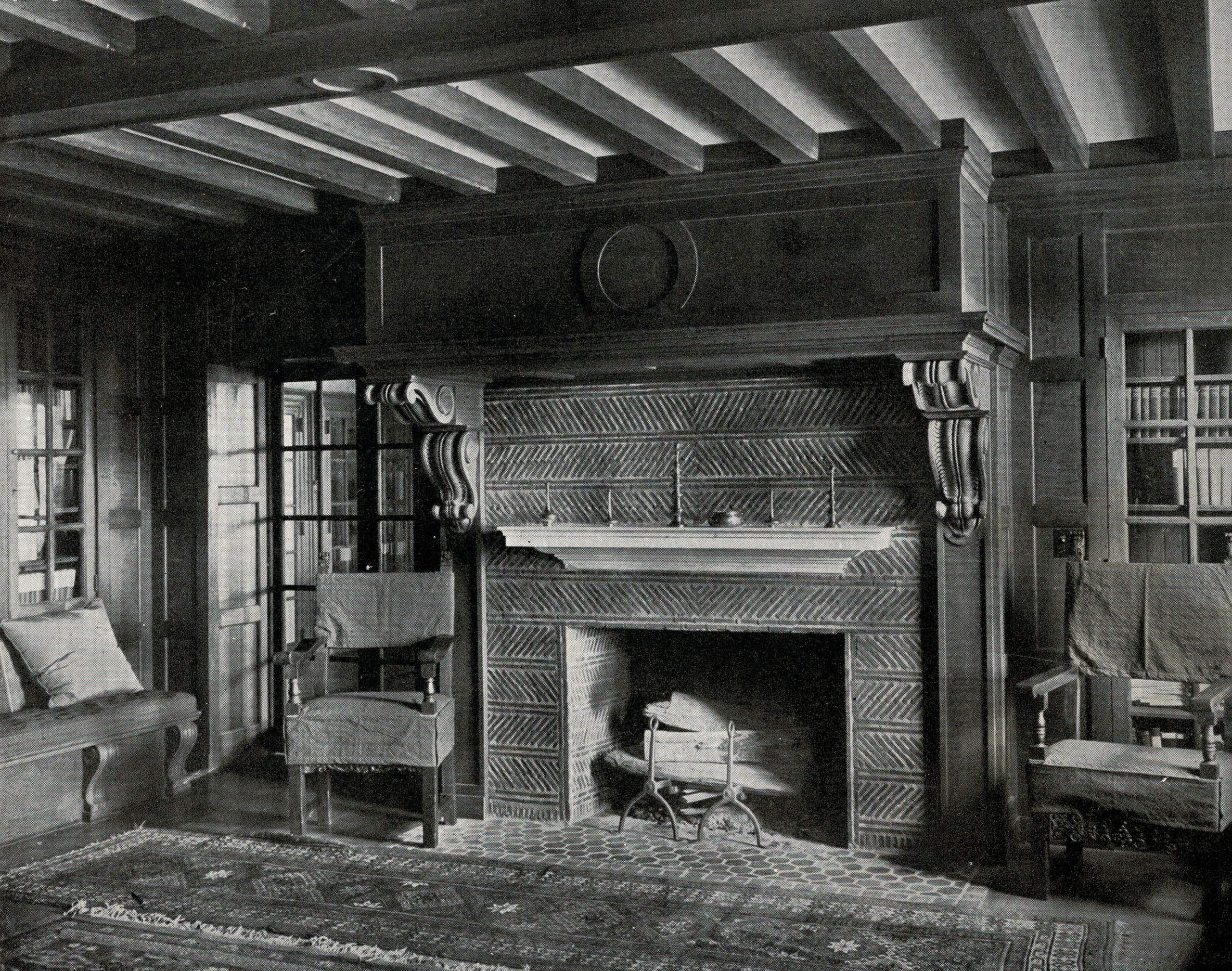
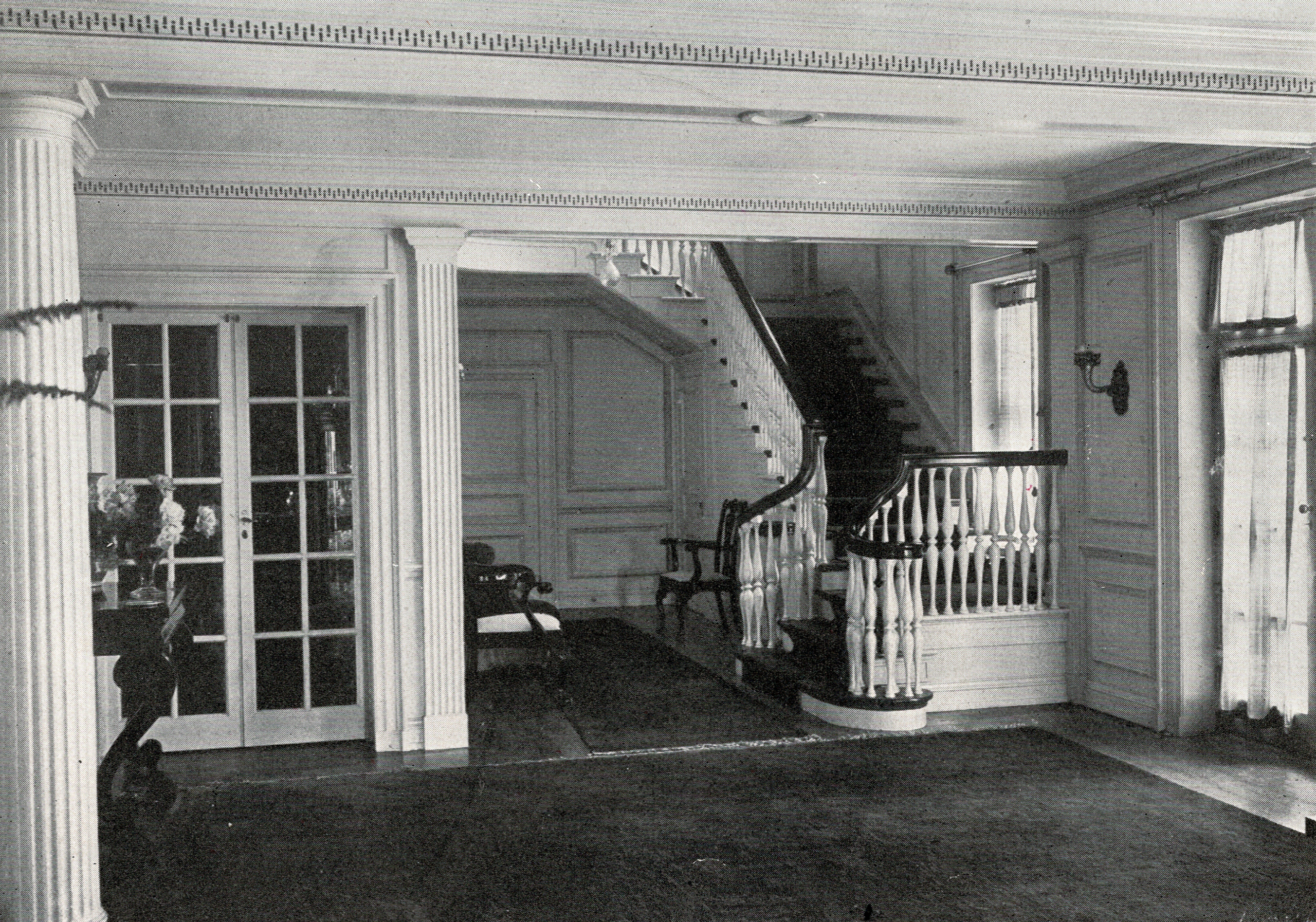
Images of the newly-built Willows Mansion (then called “Rose Garland”) circa 1910s.
Photographs taken from American Country Houses of To-Day (1913), published by The Architectural Book Publishing Co.
1910-1925: The Sinnotts
John Sinnott’s father, Joseph Francis Sinnott, was an Irish immigrant who arrived in Philadelphia in 1854 only to discover that the family members he had come to stay with in South Carolina had died of yellow fever. He quickly found work in order to support himself. At the age of 18, Joseph began working at John Gibson’s Son & Company, a distilling company headquartered in Philadelphia. The company grew exponentially to become one of the largest distilleries in the country. Within ten years, Joseph Sinnott became a partner in that business and, soon after, Gibson retired and the company changed its name to “Moore & Sinnott.” Joseph Sinnotts’s partnership with Andrew Moore continued for four years, until Moore’s death in 1888, which resulted in Sinnott acquiring full ownership of the business. Between 1889 and 1891, Joseph built a 32-room mansion in Rosemont, a suburb of Philadelphia. The mansion, named “Rathalla”, is where John Sinnott and his eight siblings were raised. Rathalla is now the Main Building at Rosemont College.
John Sinnott grew up to be a prominent member of society, participating in many religious, charitable, civic, and historical endeavors, in addition to running his business. After attending Cornell University and the University of Pennsylvania, John married Mary Henrietta Luce in San Diego, California. In 1910, he purchased the 47 ½ acres south of Darby-Paoli Road from Biddle, and the couple built a large house at the top of a hill on the property. The house was designed by the well-regarded Philadelphia architect, Charles Barton Keen, who also designed the clubhouse at Aronimink Golf Club in Newtown Township and “Reynolda,” the historic R.J Reynolds estate in Winston-Salem, North Carolina. The Sinnotts named their house and property “Rose Garland” after the Sinnott family’s ancestral home in Ireland. Built while trends in residential architectural styles were evolving, the couple chose a simple design featuring a red tiled roof, smooth plastered walls, and balconies with wrought iron railings, echoing a style that was popular in California at the time. During the construction of the house, a 2.5 acre pond was carved out of a low-lying piece of the property. This and other landscaping projects contributed to the beautiful Willows Park we know today.
The Sinnotts owned Rose Garland for approximately 14 years, after which they sold the property to H. C. Parkin. One year later, in 1925, the property was purchased by Clement A. Griscom III.
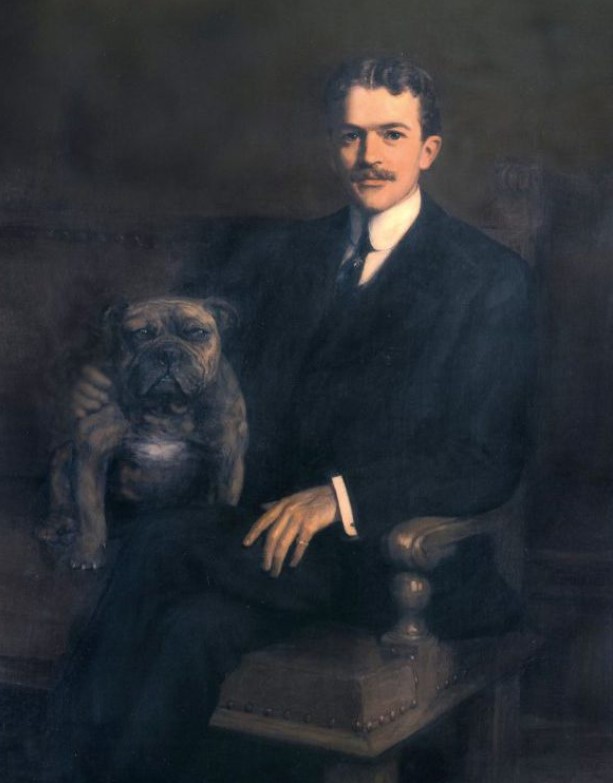
John Sinnott
Owner of Rose Garland. Photo courtesy of the Gertrude Kistler Memorial Library at Rosemont College.
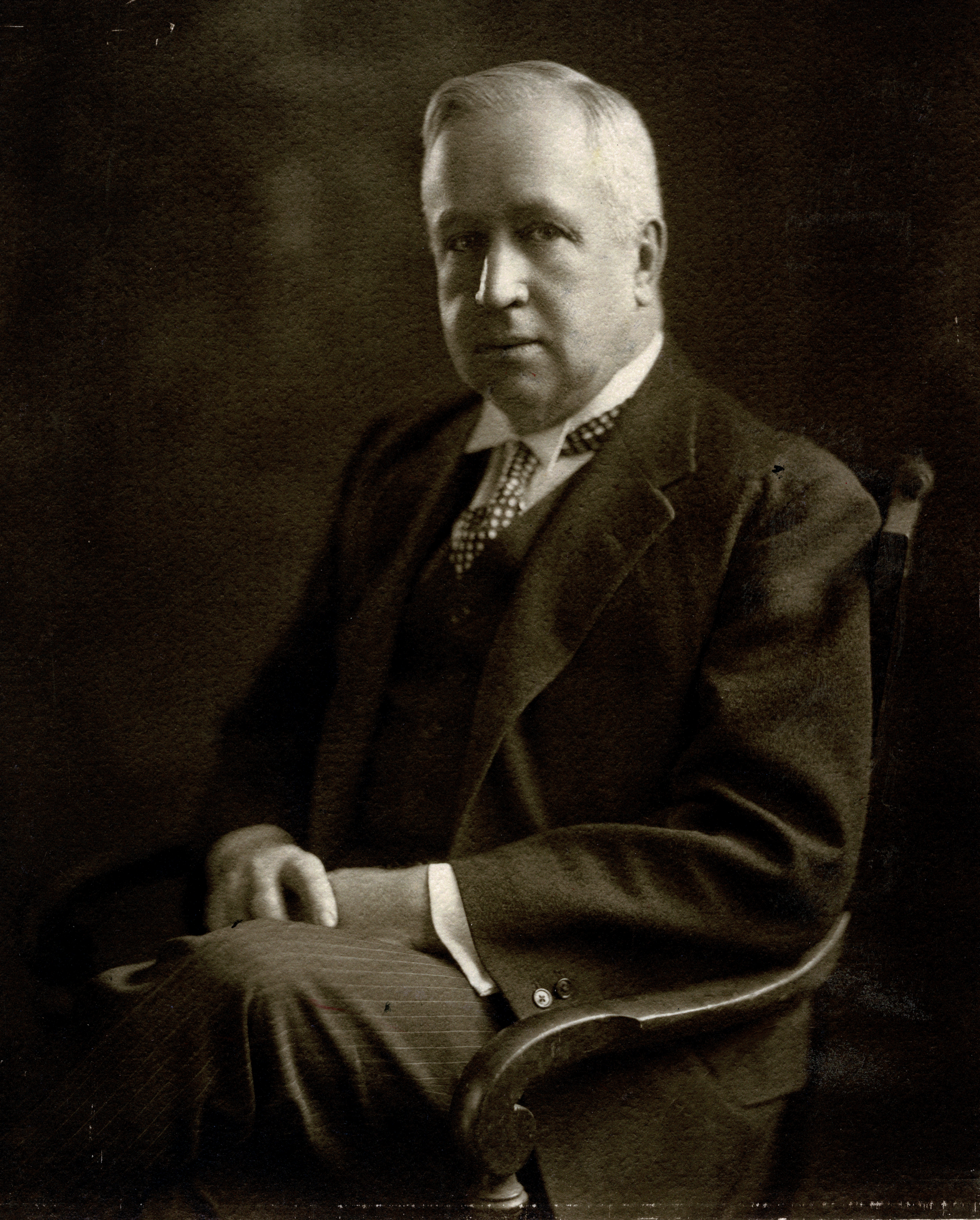
Charles Barton Keen
Architect. Photo from the private collection of Sara Pilling.
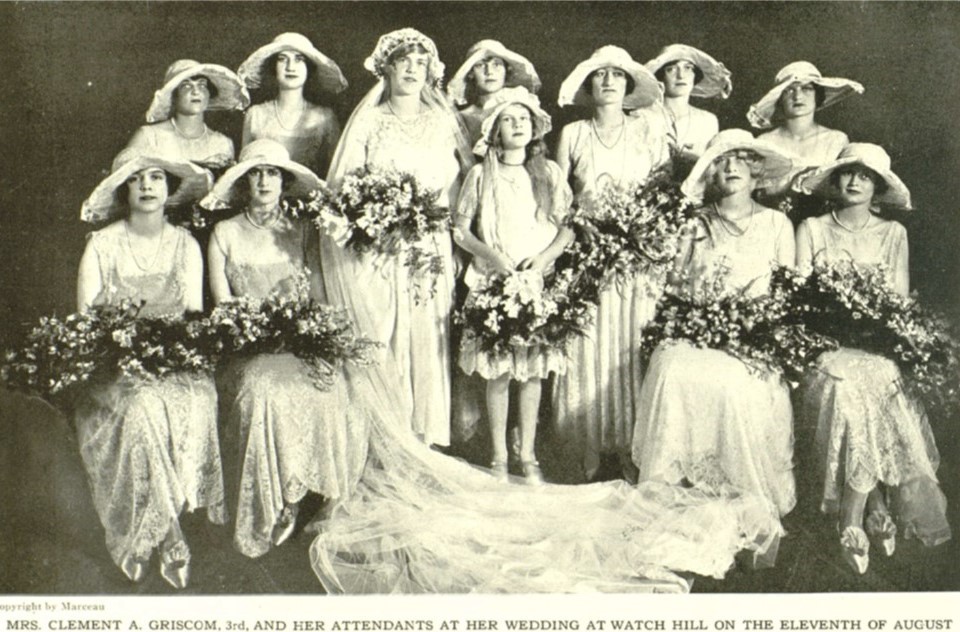
Clement Griscom III’s wife at her wedding circa 1923. Photo courtesy of the Griscom family.
1925-1934: The Griscoms
Clement A. Griscom III was the grandson of shipping magnate Clement A. Griscom, president of the International Navigation Co., which later became the International Mercantile Marine shipping trust company. Griscom and his wife owned the house for 11 years and used it primarily as a rental house. It was sold to Simon S. Neuman in 1934.
1934-1936: The Neumans
Simon S. Neuman was Chairman of the Board of Publicker Industries, a distillery business. Neuman and his wife, Helen, modernized the mansion’s kitchen and installed a stylish, post-Prohibition bar in the basement before selling the property two years later, in 1936, to Clarence Geist. The Neumans moved across the street to “Inver House” (formerly Laurento).
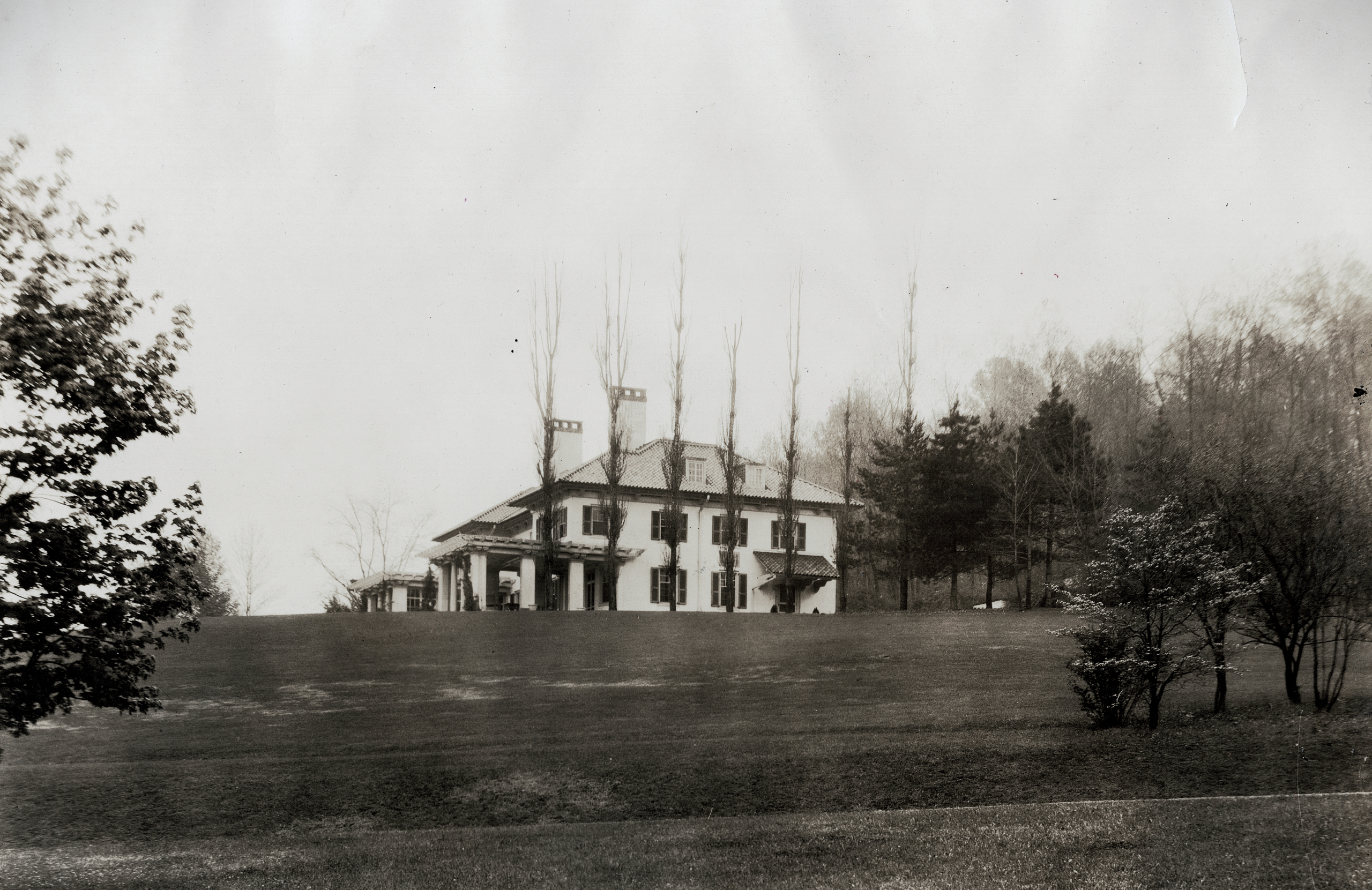
The Mansion circa 1920s. Photo courtesy of the Griscom family.
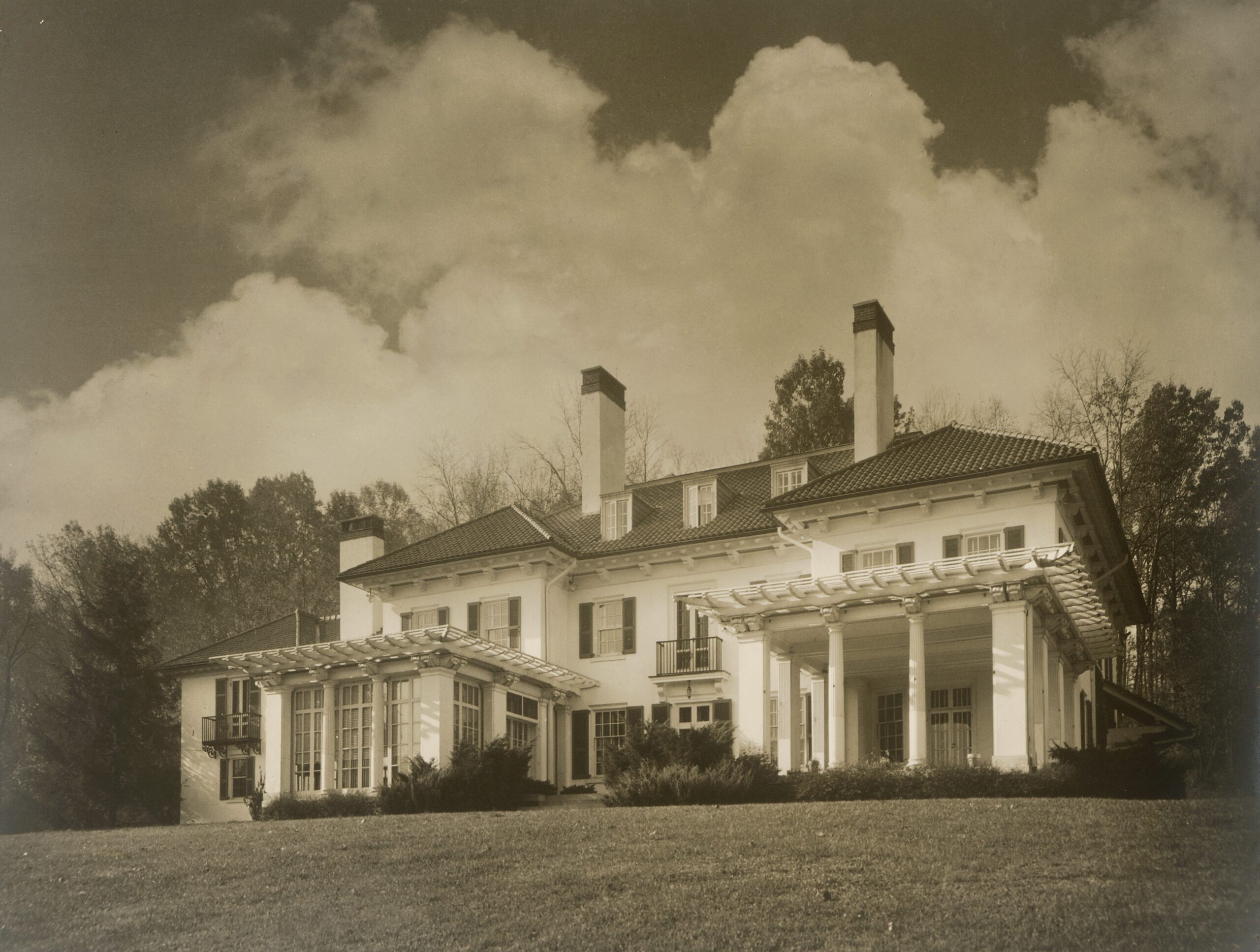
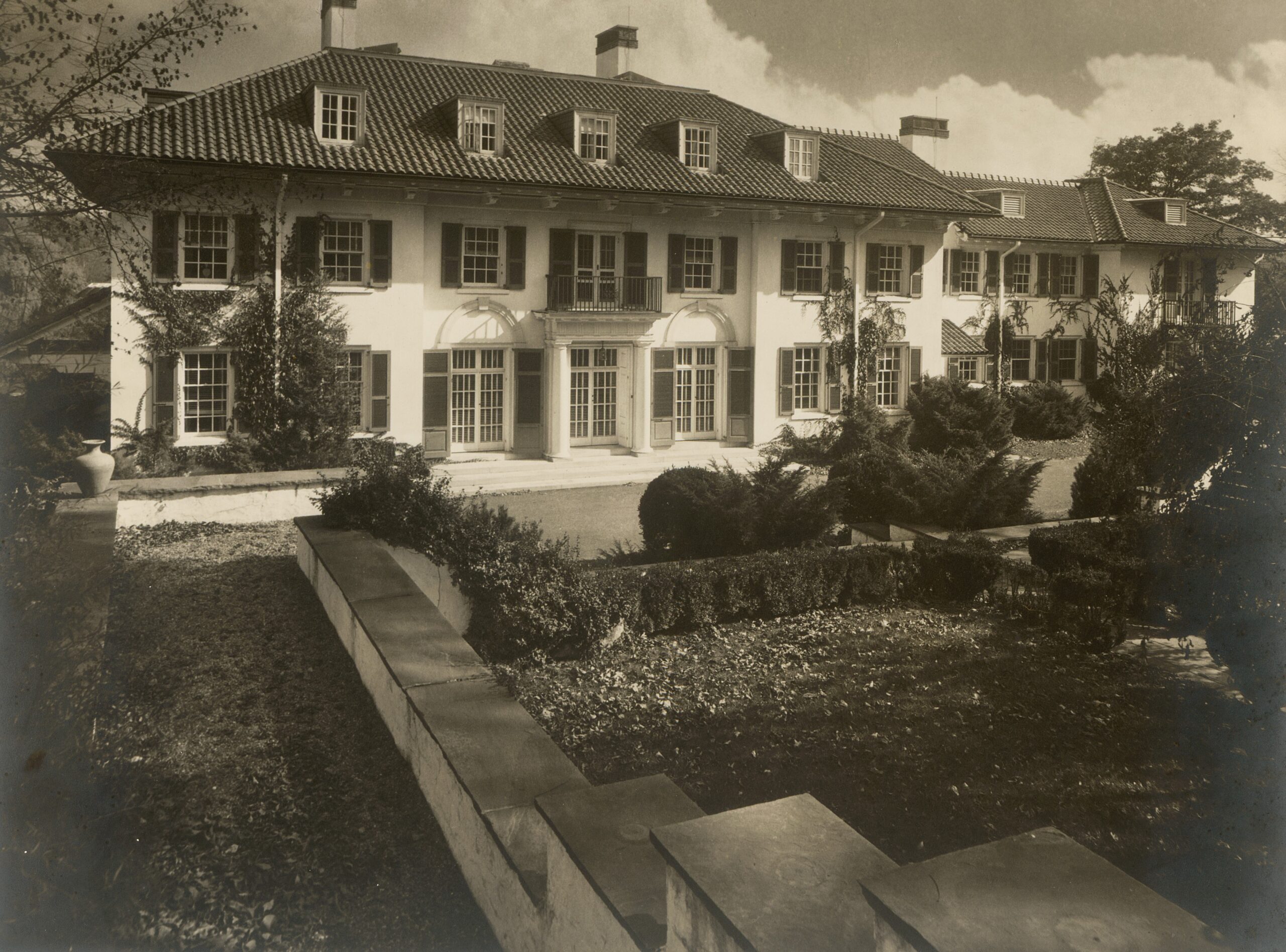
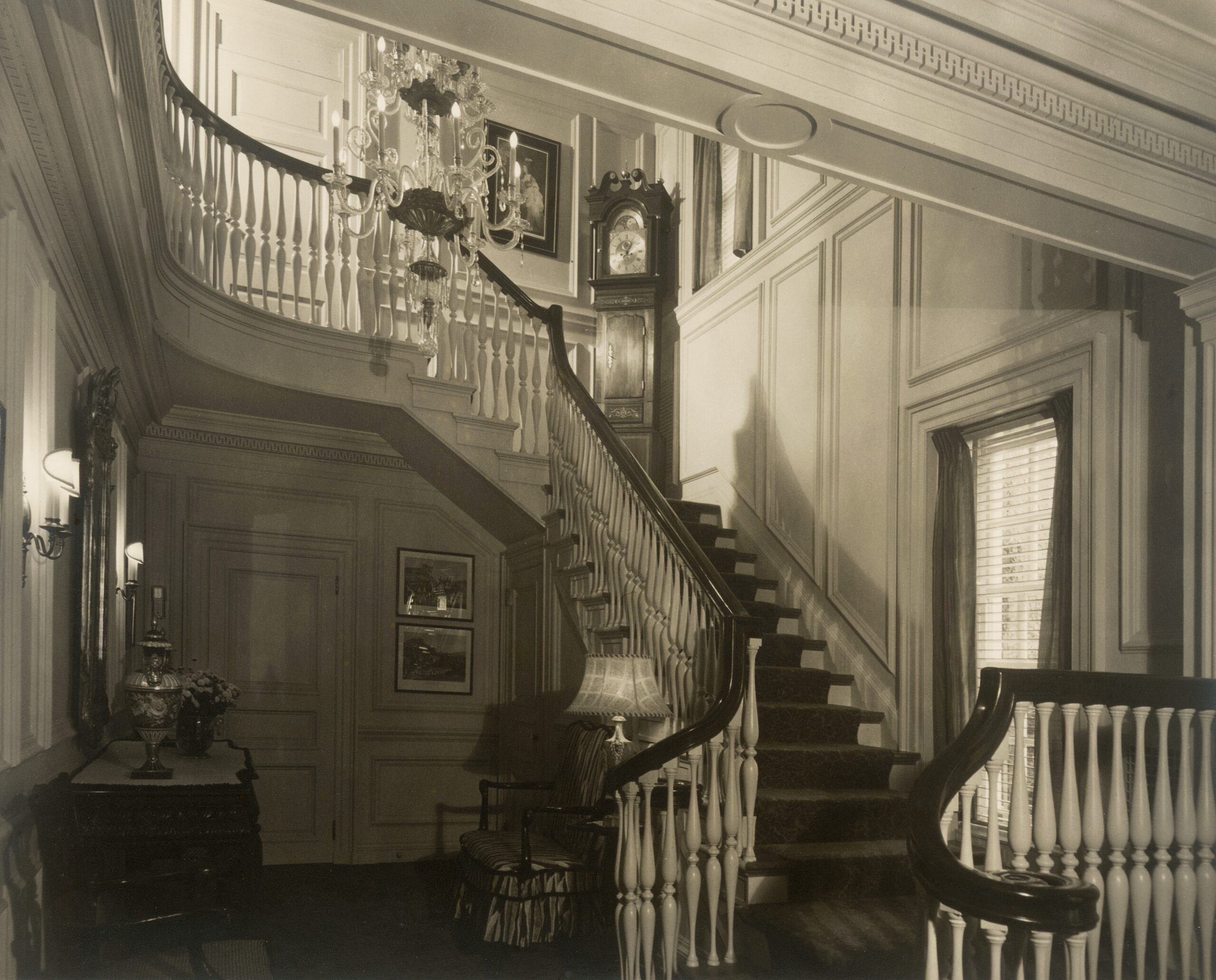
The Willows Mansion (then called “Maral Brook”) circa 1940s.
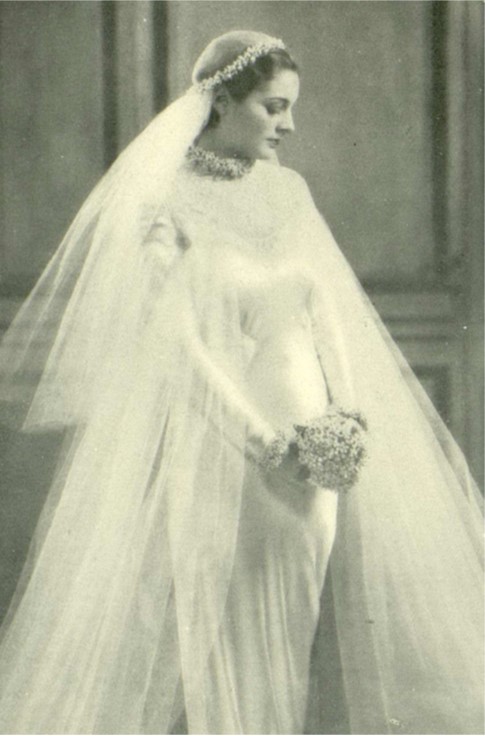
Mary Geist Zantzinger circa 1933.
1936-1973: Clarence Geist and the Zantzingers
Clarence Geist was president of Philadelphia Suburban Water Company and the owner of “Launfal”, the grand house and grounds, which are now part of the Academy of Notre Dame on Sproul Road. Geist bought the property for his daughter, Mary Golden Geist, as a wedding gift for her and her new husband, Alfred Zantzinger. Alfred was the grandson of another famous Philadelphia architect, Clarence Zantzinger, whose architectural firm designed many of the large homes in the area, including Chanticleer. Alfred and Mary Zantzinger renamed the property “Maral Brook”, using the first syllable of each of their names. They held memberships in the Racquet Club, the Gulph Mills Golf Club and the Wilmington Country Club, among other exclusive clubs. They traveled every summer with their house staff to their house in Maine. Mary and Alfred died in 1969 and 1972, respectively. They were the last to own and live in the Willows Mansion before it was purchased by Radnor Township in 1973.
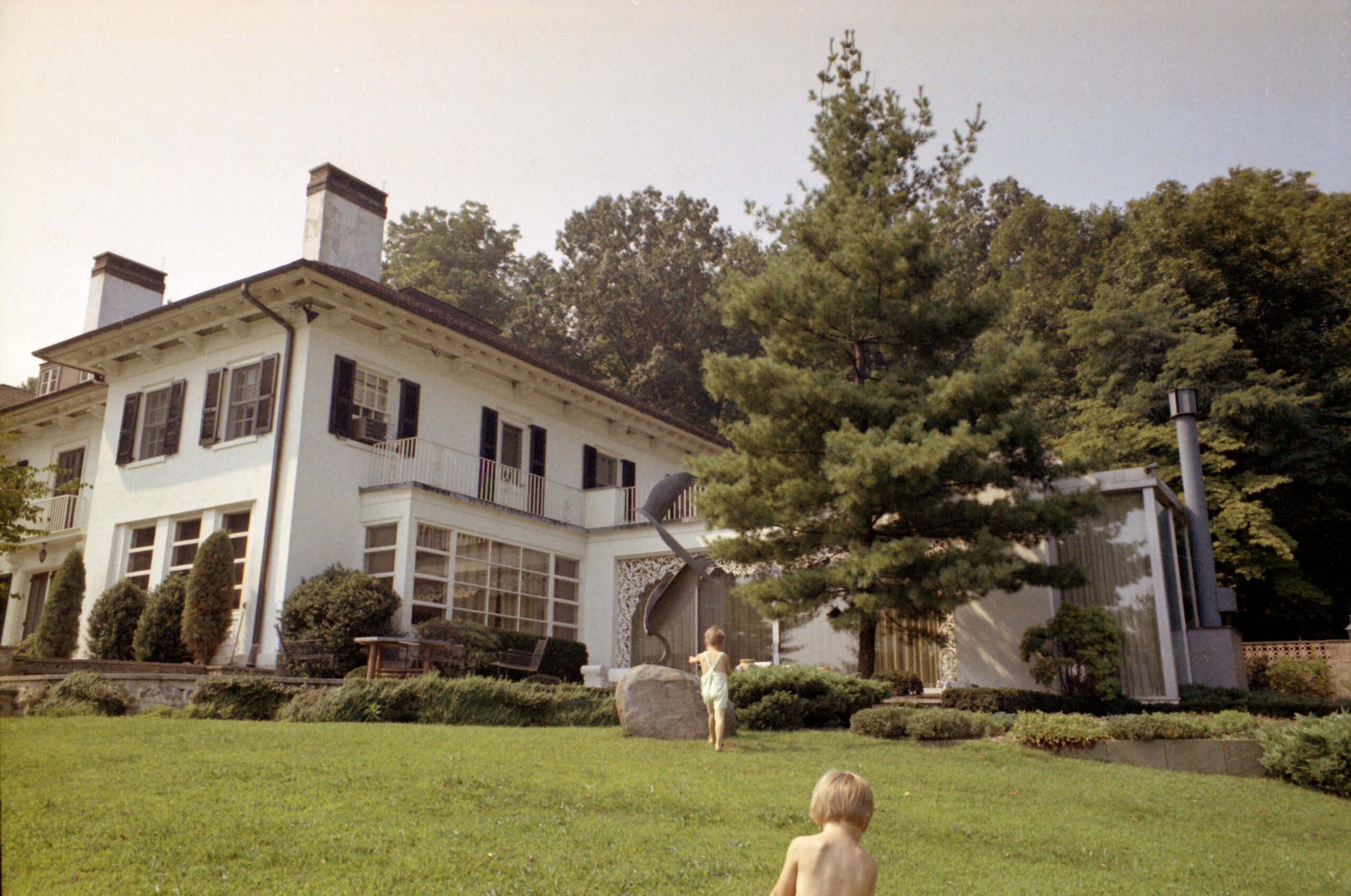
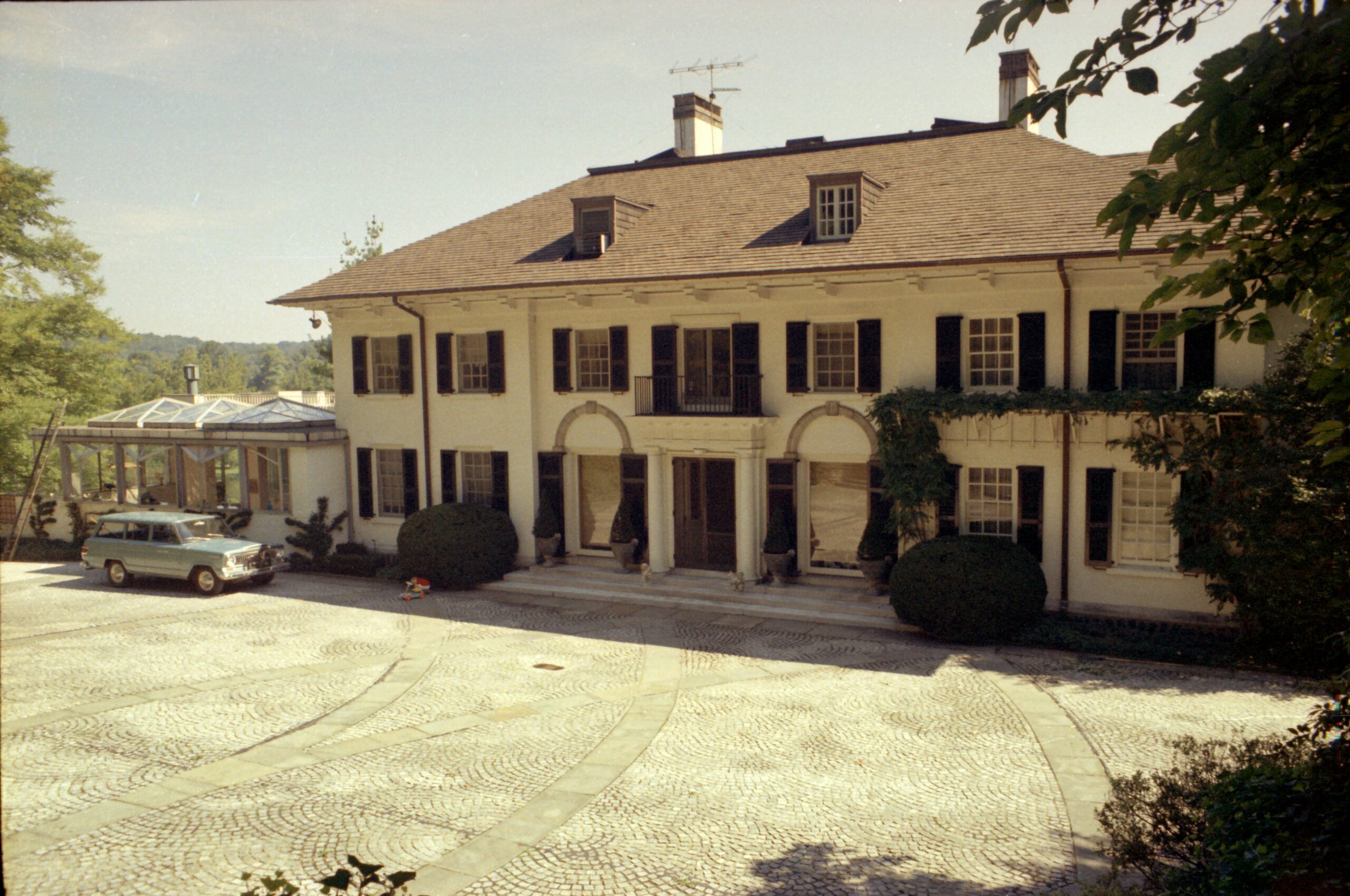
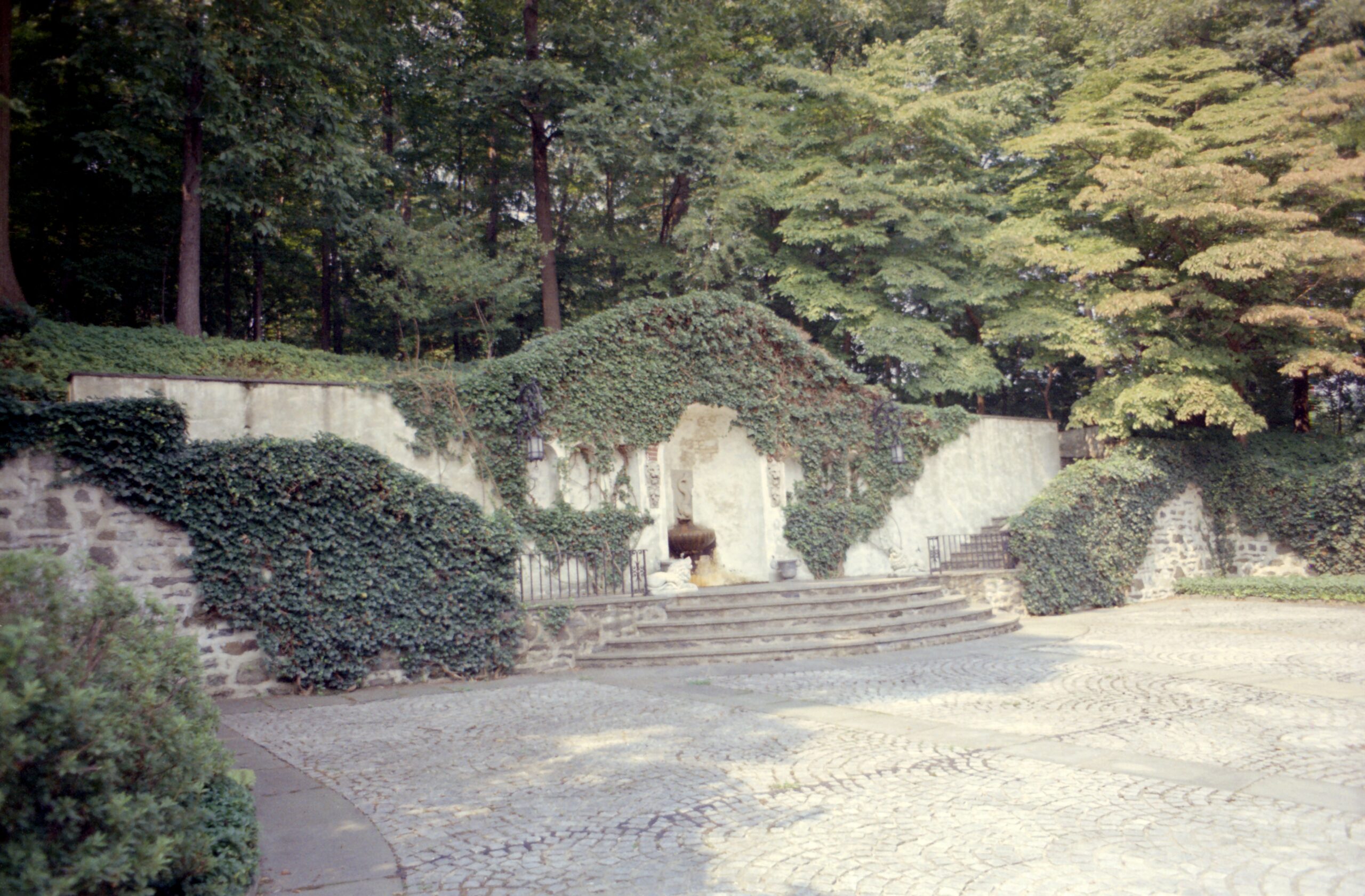
The Willows Mansion (then called “Maral Brook”) toward the end of Zantzinger ownership, circa 1970.
Photographs courtesy of Daniel Zantzinger.
1973-Present: Post-private Ownership and Operation | Radnor Township, The Willows Park Preserve and the Willows Mansion Today
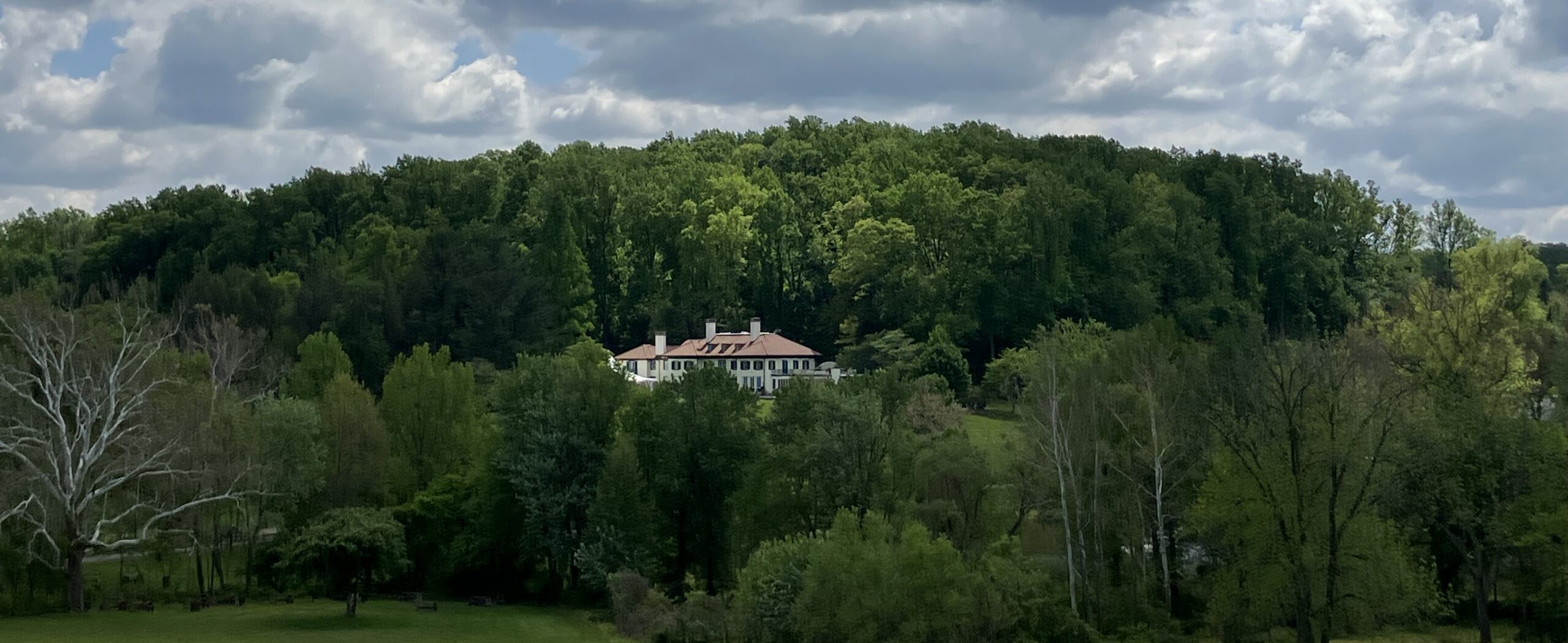
Between 1973 and 2013, the Mansion was owned and operated by Radnor Township. Those who are local to the area may remember it as the site of many memorable events, from weddings to school proms & activities, craft shows and more. By the early 2010s, the beloved Willows Mansion was over a century old, costly to operate and in need of major repairs. In 2013, the decision to close the grand historic building was made, and the mansion doors would remain shuttered for well over 7 years.
In 2017, a group of Radnor residents with a vision and passion for preserving the Mansion founded the Willows Park Preserve, a nonprofit organization whose mission was not only to physically restore the Mansion but also to reopen it for community use. In 2019, the WPP signed a 25-year lease with Radnor Township to restore, maintain and operate the Willows Mansion for the public to use.
Since then, the Willows Park Preserve has been working tirelessly to continue revitalizing the Willows Mansion, making repairs, reinforcing the structure, hosting community events, and opening its doors for public and private usage.
So how did the Willows Mansion come to be called 'The Willows'?
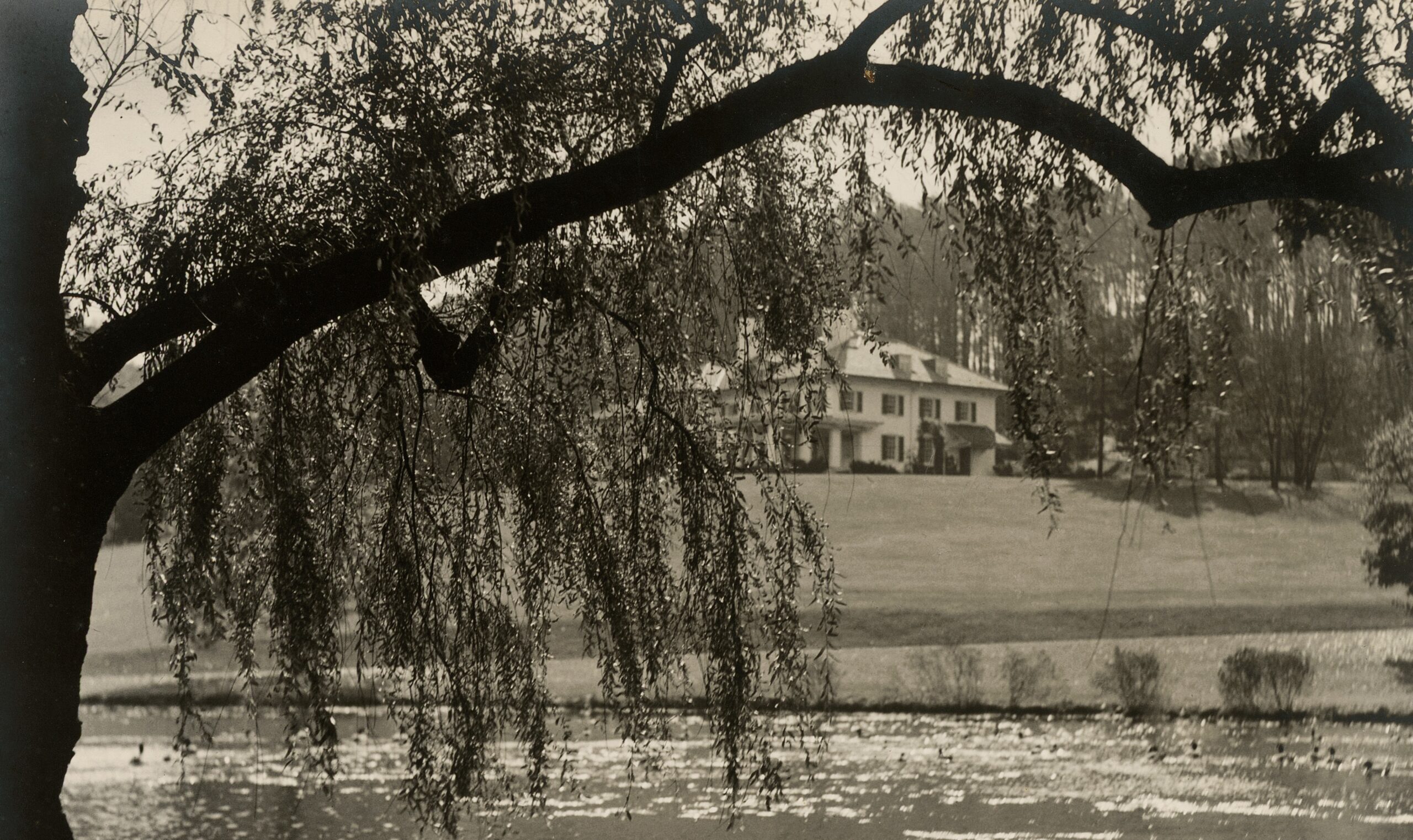
While the property was still in E. Craig Biddle’s possession, author and journalist Christopher Morley nicknamed the property “The Willows” after its many graceful willow trees. Radnor Township adopted this name for the property after its acquisition. Although the house has had three names since it was built in 1910, The Willows is the name that has lasted the longest — 50 years and counting.
Sources
The information above was compiled by Ysabel Stanton. Primary Source: “The Willows. 1910-1973″ by Phyllis C. Maier
A NOTE: Since the beginning of our organization in 2017, we are still learning more information about the history of this beautiful property. If you know something about the Willows Mansion or surrounding property that isn’t mentioned here (OR you have photos to share from throughout the years), please get in touch with us at info@willowsparkpreserve.org!
Preserve the Willows Mansion. Preserve History.
Be a part of our history, and help us revitalize this space into a place for current and future community members.